Showing posts with label practice. Show all posts

Friday, March 28, 2014

Practicing: Easter Egg Games

"Children learn to smile from their parents."                  - Dr. Shinichi Suzuki

I am always on the lookout for creative ways to encourage positive practice that will lead to discipline and endurance, as well as nurture the heart and spirit of a student (and parent!).

This time of year, you probably have a bunch of these lying around...or you will soon.

Plastic Easter eggs like these can be a fun addition to your practice routine.
Here are several ideas for how you could use plastic eggs to create practice games:

1. For Review: Write the name of each review song on a strip of paper. Put one song name inside each egg. Have your child pick and open one egg, and then play that song. You could go through all the eggs in one practice session, or decide on a number of review eggs to pick each day.

2. Egg Hunt: This is a variation of the review game. Hide the eggs in the room so that your child gets to search for the eggs first. They play each song as soon as they find the egg. (This is great for young kids who want to move around a lot.)


3. Practice Sections: Take a look at your notes from the last lesson. Find the small "practice spots" that need attention. If, for example, you need to repeat a section 5 times, then write that section of 5 slips of paper and put them in 5 eggs. Then add a few more eggs for another practice spot. Mix up the eggs and have your child pick them one at a time. This game should be completed in one practice session. It will help your child learn to stay focused, but also gives them a clear indication of when they will be finished.

4. Rewards: Fill each egg with a  small reward (coins, candy, a small toy) and place them in a basket in a visible location. Set a specific goal that will earn an egg. For example, a happy practice session, practicing all the items in your notes, playing all the review songs, completing practice on a hard spot, or staying on the bench for the whole practice session. Make sure the child knows exactly how to earn the egg, and when it will be rewarded to them. 


Friday, February 28, 2014

Music Activities: Spring themes


Spring is coming and it is time for some fresh ideas!

Here are some fun ways to reinforce what you are learning in lessons. The links below will lead you to games and worksheets, most with a Spring or Easter theme. 


Suggested uses: 
  • Find a game that will help with a concept for which you could use some practice. For example, matching the piano keys with their letter names, or notes on the staff. Play the game at the end of your practice time as a reward for good practicing. 
  • You could play the game at a completely different time than your practice time for a short review session.
  • Make two copies of a worksheet. Be the teacher for someone else in your family. Can you help them complete the worksheet? Be sure to explain how to figure out the answers!


Colorful Bunny Keys            


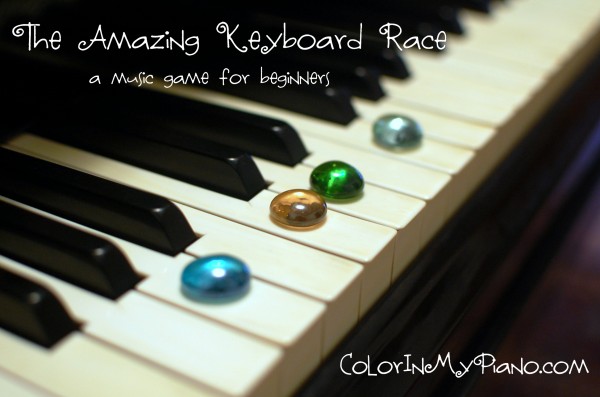
Amazing Keyboard Race Game    


   Color the Egg


Bunny Basics (note story)


Friday, February 14, 2014

How to Succeed

As musical artists, we are always practicing to improve our ability to express ourselves through the music we play. We must improve our technique so that we can play those tricky or fast passages clearly and with ease. We must strengthen our memory of each part of a piece. We study theory and the structure of music to improve our playing and our composing abilities.

We spend hours preparing for, learning and polishing a piece before we share it with other people. The great artists we look up to have spent even MORE hours working on their music. 

Yet so often we hear the comment, "She is talented," as if that is the explanation for why she can play so well.


Dr. Suzuki said, "Knowledge is not skill. Knowledge plus 10,000 times is skill."


The way to succeed at anything is to repeat what you know how to do over and over again, and also add to your knowledge as you go.

This is the reason that we work on review pieces instead of just "going on" to the next thing. This is the reason we celebrate with book recitals which require us to work on many pieces for more than a year.

Through review and continued study, we reach new levels of ability and expression in a piece. We get a little closer each day to the way we want to sound.

This video, featuring the statements of Ira Glass, a writer, describes this idea about how to close the gap between what we want to be or do, and what we currently can do.


THE GAP by Ira Glass from frohlocke on Vimeo.


Friday, October 25, 2013

On the Why and How of Practicing Music

There always seems to be a discussion happening about the benefits of music and the arts. Evidence seems to indicate that people who learn a musical instrument hone creative, collaborative, and technical abilities that are useful and desirable in all of life. These benefits are in addition to the most obvious reasons to participate in music or the arts...we enjoy it and find it beautiful!

I am providing two links to writers who each contribute some interesting thoughts to the ongoing conversation. In the first, Joanne Lipman writes for the New York Times to address the question of how much music training has contributed to the success of well-known people in our society. Among the qualities Joanne notes these people improved through music training are "collaboration, creativity, discipline and the capacity to reconcile conflicting ideas".

Is Music the Key to Success?

The second writer is concert pianist Stephen Hough. His blog provides us with an insight into how a professional musician approaches practicing and preparing for a performance. Parents of Suzuki students may find an idea or perhaps just a refreshed perspective about practicing in this blog.

The Practice of Practicing

Do you have any thoughts or tips about practicing to share? Please leave a comment below!

Friday, March 22, 2013

Practicing: Spot Spotting

   Have any of you ever gone deer spotting? 
Deer spotters take a bright spotlight with them out into a field at night and try to catch deer in their light.  Today we are going Spot Spotting in your music. What does that mean? 

Parents, make a list of all the practice spots mentioned in the last lesson, as well as any other tricky spots your child is struggling with.  

If your child struggles with putting line 3 of Cuckoo hands together, put that on the list.  If they need to practice G arpeggios for Minuet 2, put that on the list. If they keep forgetting the special chord in French Children's song, put that spot on the list. Each spot should be only a few measures long.  Do not put an entire song on the list.

Number the items in your list from 1-6.  If you still have more items, start the numbers again and continue numbering 1-6 until all the items have a number.

Give your child a die to roll.  Declare that Spot Spotting season has begun and have them roll.  How many spots are on the die? Practice the items on your list, checking off each one as you complete it.

Looking for other practice games to play? Check out the Pirates Practice and Dino Stomp games at talentpress.net. 

This game is based on a game by Paula Bird on her blog Teach Suzuki.

Friday, October 26, 2012

Make Practice Fun: Reward Repetitions

This time of year can mean that your family ends up with LOTS of candy or treats in the house.  You can use all those treats as a reward for doing repetitions during practice time. This is a fun way to moderate when your child gets those sweets, and to make practicing a positive experience.

1. Choose a small section of a piece (1-4 measures) that is tricky or has been a problem spot.  Make sure that the size of the section is appropriate so that your child can succeed at playing it with no mistakes.  Set a specific goal for the repetition.
        For example: Play the whole measure with no mistakes.
               OR
                               Get the jump in the right hand perfect, without a pause.  (In this case, you might let a different, small mistake, that only pops up once, slide.)

2. Agree on the exact way your child can earn their reward.  
        If you have small candies like M&Ms or Skittles, they might earn one piece per repetition.
        If the treat is larger, you might agree that 5 or 10 repetitions earns the treat.

3. Have your child play the section while you listen.  Did they reach the goal you set? 
      If they met the goal, give them the reward.  If you hear other things that you need to work on, let it go until the next practice time.  

Non-food rewards

You can do the same practice technique with other rewards, with just as much success!

  • Use blocks.  Set an agreed upon number of blocks on one side of the piano. When child completes a repetition, they may move one block to the other side of the piano. When they finish, they could build a tower with the blocks they collected! (This also allows them to see when they will be finished.)
  • Use pompoms.  These fluffy, colorful balls are fun to move from one side of the piano to the other, or to place in a basket. 
  • Use pennies. Kids love to earn money.  Grab those extra pennies and let your child earn one penny per repetition. 

    Have fun!

Wednesday, September 5, 2012

Suzuki Resources: Preparing for Practice


  It is time to begin our regular lessons once again.  Now is the time to set up a practice routine for your child.  Take a look at the family schedule.  When will you be able to set aside an appropriate amount of time for practice each day?  Remember to allow for time to rejuvenate after a school day.  A snack will give a boost to their physical and mental state.  

There are all kinds of opportunities out there to involve your child in many activities.  Remember, taking instrumental lessons is not a once a week activity!  It is a daily commitment.  Be sure to look at your schedule before you sign up for other activities (sports, dance, drama, etc) to make sure there is still room for daily practice time.  If you have a child who is a morning person, you could try setting aside some, or all, of the practice time before they leave for school.  

  Suzuki parents are the "home teachers" in the Suzuki triangle of student, teacher, parent.  Prepare for quality practice time by taking detailed notes at lessons and asking your teacher any questions that come to mind.  Encourage your child at home by affirming the things they are doing well.  Help your child discipline themselves to practice the things that still need work.

  Every Suzuki parent and child relationship is unique, but there are universal challenges.  You can be sure that if you are struggling to get your child to repeat a passage more than 2 times, or if some days they say, "I don't like this",  you are not alone!  

  I highly recommend Edmund Sprunger's book Helping Parents Practice as a resource for Suzuki parents.  Mr. Sprunger has organized the book according to different practice issues.  You do not have to read the book from beginning to end, but can jump to any topic that fits your situation.  The book is full of great ideas for making practice fun and encouraging for your child.  

Winning Ways: Strategies for Suzuki Parents is a collection of articles from the American Suzuki Journal covering a variety of topics including Suzuki philosophy in action, motivation, and teenage Suzuki students.

 The Suzuki Association store has many other resources for parents and students.  You can find books by Dr. Suzuki, including Nurtured by Love.