I hope you all had a wonderful Christmas holiday! I enjoyed spending time with my extended families, playing games, and eating delicious food.
Today I am focused on the upcoming new semester of piano lessons. Here are some moments I am looking forward to in the new year:
1. Talented guitarist, Alex Brubaker, will visit some group classes in February and March.
In February, Alex will demonstrate his technique for recording and looping tracks to create a piece of music. He will help us understand and imagine how we might create loops as well. Students who attend this class will then create their own looping piece on the computer so that Alex can hear it when he returns in March!
Click on his name above to hear some of his music.
2. My husband is currently helping me create a brand new website for my studio. Stay tuned for the launch of a new website!
Happy New Year to you all!
Monday, December 30, 2013
Saturday, December 7, 2013
Friday, November 22, 2013
A Little Night Music: The Music of Crickets
As they explain on the recording, you are hearing two tracks. One track is the crickets at the normal speed we usually hear them. The other track is the same crickets slowed down.
Friday, November 8, 2013
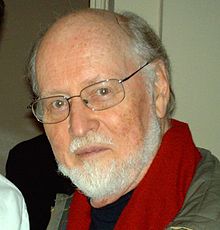
Composer Spotlight: John Williams
These days, the movie industry creates a place for many composers and musicians to create new music that the whole world will hear. This music is used to tell a story, to set the scene, and to bring up emotional feelings like happiness, sadness and danger for the people who are listening and watching.
John Towner Williams, Jr. was born in 1932. He is a very successful film composer. Today he is considered to be one of the best film composers of all time! He has won 5 Academy Awards, but has been nominated 48 times for the award. The only other person to be nominated more times for this award is Walt Disney. He has also won many other awards.
Mr. Williams is a composer, conductor and a pianist. He has been working as a musician in these ways for over 60 years, and is still composing today.
Here are just a few of the movies he has written music for:
Jaws
Indiana Jones
Star Wars
Superman
E.T., the Extra-Terrestrial
Schindler's List
Harry Potter
The Adventures of Tintin
He also wrote the theme song for some of the Olympic Games.
Writing music for a movie takes a lot of work! The director of the movie meets with the composer to tell them about the movie and to show them the film. Then the composer must create themes for the movie. Mr. Williams composes these themes on the piano first. Later he will score them for an orchestra to play. Once the orchestra learns the music, Mr. Williams conducts the music while watching parts of the movie so that he can make the film and the music go together. He and the director must work to make sure the music and the video do the best possible job of telling the story of the movie.
Below is a video of John Williams talking about working with director Steven Spielburg on the movie E.T., the Extra-Terrestrial. This movie came out in 1982, and today it is considered to be a classic. John Williams won an Academy Award for Best Original Score for this movie.
John Towner Williams, Jr. was born in 1932. He is a very successful film composer. Today he is considered to be one of the best film composers of all time! He has won 5 Academy Awards, but has been nominated 48 times for the award. The only other person to be nominated more times for this award is Walt Disney. He has also won many other awards.
Mr. Williams is a composer, conductor and a pianist. He has been working as a musician in these ways for over 60 years, and is still composing today.
Here are just a few of the movies he has written music for:
Jaws
Indiana Jones
Star Wars
Superman
E.T., the Extra-Terrestrial
Schindler's List
Harry Potter
The Adventures of Tintin
He also wrote the theme song for some of the Olympic Games.
Writing music for a movie takes a lot of work! The director of the movie meets with the composer to tell them about the movie and to show them the film. Then the composer must create themes for the movie. Mr. Williams composes these themes on the piano first. Later he will score them for an orchestra to play. Once the orchestra learns the music, Mr. Williams conducts the music while watching parts of the movie so that he can make the film and the music go together. He and the director must work to make sure the music and the video do the best possible job of telling the story of the movie.
Below is a video of John Williams talking about working with director Steven Spielburg on the movie E.T., the Extra-Terrestrial. This movie came out in 1982, and today it is considered to be a classic. John Williams won an Academy Award for Best Original Score for this movie.
Friday, October 25, 2013
On the Why and How of Practicing Music
There always seems to be a discussion happening about the benefits of music and the arts. Evidence seems to indicate that people who learn a musical instrument hone creative, collaborative, and technical abilities that are useful and desirable in all of life. These benefits are in addition to the most obvious reasons to participate in music or the arts...we enjoy it and find it beautiful!
I am providing two links to writers who each contribute some interesting thoughts to the ongoing conversation. In the first, Joanne Lipman writes for the New York Times to address the question of how much music training has contributed to the success of well-known people in our society. Among the qualities Joanne notes these people improved through music training are "collaboration, creativity, discipline and the capacity to reconcile conflicting ideas".
Is Music the Key to Success?
The second writer is concert pianist Stephen Hough. His blog provides us with an insight into how a professional musician approaches practicing and preparing for a performance. Parents of Suzuki students may find an idea or perhaps just a refreshed perspective about practicing in this blog.
The Practice of Practicing
Do you have any thoughts or tips about practicing to share? Please leave a comment below!
I am providing two links to writers who each contribute some interesting thoughts to the ongoing conversation. In the first, Joanne Lipman writes for the New York Times to address the question of how much music training has contributed to the success of well-known people in our society. Among the qualities Joanne notes these people improved through music training are "collaboration, creativity, discipline and the capacity to reconcile conflicting ideas".
Is Music the Key to Success?
The second writer is concert pianist Stephen Hough. His blog provides us with an insight into how a professional musician approaches practicing and preparing for a performance. Parents of Suzuki students may find an idea or perhaps just a refreshed perspective about practicing in this blog.
The Practice of Practicing
Do you have any thoughts or tips about practicing to share? Please leave a comment below!
Friday, October 11, 2013
Composer Spotlight: Gilbert and Sullivan
Sir W.S. Gilbert and Sir Arthur Sullivan are famous for their comic operas. A comic opera is a drama that is sung and is funny and light-hearted, and usually has a happy ending. It is a type of operetta.
Gilbert and Sullivan lived in England. They worked together from 1871-1896 and wrote fourteen comic operas together. Sir Gilbert wrote the words, or libretto, for the operas. Sir Sullivan composed the music. Three of their most famous operas are H.M.S. Pinafore, The Pirates of Penzance and The Mikado.
The characters in the comic operas are exaggerated and their actions can be very silly, which is one thing that makes the shows fun to watch. In H.M.S. Pinafore, Gilbert and Sullivan made fun of the English Navy. Here is the song about the captain (who thinks a lot of himself). He sings about how great he is, but the sailors question him on some things, like whether he ever gets seasick.
Gilbert and Sullivan lived in England. They worked together from 1871-1896 and wrote fourteen comic operas together. Sir Gilbert wrote the words, or libretto, for the operas. Sir Sullivan composed the music. Three of their most famous operas are H.M.S. Pinafore, The Pirates of Penzance and The Mikado.
The characters in the comic operas are exaggerated and their actions can be very silly, which is one thing that makes the shows fun to watch. In H.M.S. Pinafore, Gilbert and Sullivan made fun of the English Navy. Here is the song about the captain (who thinks a lot of himself). He sings about how great he is, but the sailors question him on some things, like whether he ever gets seasick.
In The Pirates of Penzance, one character is a "Major-General". A Major-General is supposed to know about the military, but they made this character funny by making him know a lot about many things in general and not the military! In college you can "major" in a subject which you study. The Major-General has "majored" in lots of subjects, but not the one he should know about!
Here is the song "I am the very Model of a Modern Major-General" from The Pirates of Penzance. This song is quite difficult to sing because there are so many words.
Tuesday, September 17, 2013
Composer Spotlight: J.S. Bach
In the next few months, we will be focusing on different composers and their works.
Johann Sebastian Bach was born in 1685 in the country of Germany. He is part of the Baroque period of music.
Although the piano as we know it did not exist in that time, there were other keyboard instruments that Bach played on and composed music for. Bach composed many pieces for the organ and the harpsichord. In total, Bach wrote more than a thousand compositions.
He is considered to be one of the greatest composers of all time, not just because of how many pieces he composed, but because of the musicianship that is required to play the pieces and how much people have enjoyed his music. Imagine if people were still enjoying and playing your music more than 200 years after you wrote it!
In the video below, you can watch organist Hans-Andre Stamm perform one of Bach's most famous pieces of music - the Toccata and Fugue in D minor.
This is a huge organ, with hundreds of pipes that create high sounds, low sounds, trumpet sounds, reed sounds, and other sounds. The pipes are controlled by levers on the side of the keyboards called stops. The ones that are pulled out further than the others are the ones he is currently using. Look how many more stops there are!
There are even stops that go with the keys that the feet play. Imagine if you pulled out all the stops...how loud and incredible a sound you would get! This is where the phrase "pull out all the stops" comes from.
The second video is Bach's Prelude and Fugue number 2 from a collection of preludes and fugues called The Well-Tempered Clavier. Anthony Newman is playing it on the harpsichord. You will notice that this instrument also has more than one keyboard. Like the piano, it has strings, but the harpsichord plucks the strings instead of hitting them, which creates a very different sound from the piano.
Johann Sebastian Bach was born in 1685 in the country of Germany. He is part of the Baroque period of music.
Although the piano as we know it did not exist in that time, there were other keyboard instruments that Bach played on and composed music for. Bach composed many pieces for the organ and the harpsichord. In total, Bach wrote more than a thousand compositions.
He is considered to be one of the greatest composers of all time, not just because of how many pieces he composed, but because of the musicianship that is required to play the pieces and how much people have enjoyed his music. Imagine if people were still enjoying and playing your music more than 200 years after you wrote it!
In the video below, you can watch organist Hans-Andre Stamm perform one of Bach's most famous pieces of music - the Toccata and Fugue in D minor.
This is a huge organ, with hundreds of pipes that create high sounds, low sounds, trumpet sounds, reed sounds, and other sounds. The pipes are controlled by levers on the side of the keyboards called stops. The ones that are pulled out further than the others are the ones he is currently using. Look how many more stops there are!
There are even stops that go with the keys that the feet play. Imagine if you pulled out all the stops...how loud and incredible a sound you would get! This is where the phrase "pull out all the stops" comes from.
The second video is Bach's Prelude and Fugue number 2 from a collection of preludes and fugues called The Well-Tempered Clavier. Anthony Newman is playing it on the harpsichord. You will notice that this instrument also has more than one keyboard. Like the piano, it has strings, but the harpsichord plucks the strings instead of hitting them, which creates a very different sound from the piano.
Friday, August 16, 2013
Listening: The Wizard of Ahhhs
Here is a fun music video that was created about the movie, The Wizard of Oz. The music is a combination of many of pop songs. The fun part is that the words still help tell the story of the The Wizard of Oz! Do you recognize any of the songs?
The singers in this video are Todrick Hall, who was a finalist in season 9 of American Idol, and the a capella singing group, Pentatonix, who won the third season of The Sing-Off. The word "a capella" means that people are singing without any accompaniment from other instruments. You will hear what sounds like drums and a bass guitar in the music video, but each of those are actually one of the members of the group making those sounds!
Enjoy your visit to Oz!
The singers in this video are Todrick Hall, who was a finalist in season 9 of American Idol, and the a capella singing group, Pentatonix, who won the third season of The Sing-Off. The word "a capella" means that people are singing without any accompaniment from other instruments. You will hear what sounds like drums and a bass guitar in the music video, but each of those are actually one of the members of the group making those sounds!
Enjoy your visit to Oz!
Friday, August 2, 2013
Listening: Mr. Rogers Remix
These days, computers allow us to create music out of any kind of sound. You can even change the words someone speaks so that it sounds like a note!
In the video below, you will hear a remix of scenes from Mr. Rogers' Neighborhood. A remix is a song in which the original song or, in this case, spoken words, are changed to create a new song. The pitch of Mr. Rogers' voice has been edited using a computer so that it sounds like notes in the song.
This could also be an example of sampling. Sampling takes parts, or samples, of a sound recording and reuses it in another song or piece of music.
Definitions of remix and sampling from wikipedia.com.
In the video below, you will hear a remix of scenes from Mr. Rogers' Neighborhood. A remix is a song in which the original song or, in this case, spoken words, are changed to create a new song. The pitch of Mr. Rogers' voice has been edited using a computer so that it sounds like notes in the song.
This could also be an example of sampling. Sampling takes parts, or samples, of a sound recording and reuses it in another song or piece of music.
Definitions of remix and sampling from wikipedia.com.
Thursday, July 18, 2013
Event: Lancaster International Piano Festival
There is a piano festival this coming week in our own backyard! The Lancaster International Piano Festival is taking place at the Ware Center in downtown Lancaster and the Winter Center in Millersville from July 20-29.
The festival, will offer many opportunities to hear great piano music by faculty as well as other world-class pianists. There is also a Chopin piano competition for students.
Many of the events, including the competition, are free to watch, although you must reserve a ticket here.
The faculty and feature artist concerts cost $20 and you can also reserve tickets online here.
You can also buy tickets at the door.
You can read about the Guest Artists at http://www.lancasterpianofest.com/guestartists.html.
If you are able, check out one of the concerts during the week!
Friday, July 5, 2013
Listening: The World is Beautiful
Last Friday morning, I went outside to look at the hydrangea bushes which were beginning to bloom. I was fascinated by the sight of some small bees who were flying around and landing on the blossoms. I took some short video clips of them. Inspired by the video and the sounds of the birds in the background, I improvised a piece of music to accompany the beauty I had just experienced.
Here is the piece that I composed. I am sorry that I didn't have a way to make it with higher video quality, but I hope you will enjoy listening. The music the birds were making in the background is part of my music. Together, we say, "The World is Beautiful."
Look at the world around you. What do you find that is beautiful?
Can you create some music that describes what you see or how you feel?
You can record yourself as you improvise (make up things) on the piano. Maybe you hear some sounds around you that can be part of your music as well. If you hear something you really like, bring it to your next lesson so that I can listen to it too!
Here is the piece that I composed. I am sorry that I didn't have a way to make it with higher video quality, but I hope you will enjoy listening. The music the birds were making in the background is part of my music. Together, we say, "The World is Beautiful."
Look at the world around you. What do you find that is beautiful?
Can you create some music that describes what you see or how you feel?
You can record yourself as you improvise (make up things) on the piano. Maybe you hear some sounds around you that can be part of your music as well. If you hear something you really like, bring it to your next lesson so that I can listen to it too!
Friday, June 21, 2013
Composer Spotlight: Jeff Raught
Jeff Raught is a funny, creative, talented artist. His main instrument is piano and he plays in a fun and unique style. On his website, Jeff describes the kind of music he plays as "a little jazz, a little laid back, some fun. I don't really know."
Jeff didn't have much formal training in music, but he loves to improvise. His performances are always fun.
He is also a comedian, so some of his songs are very funny. He performs with Ted Swartz in the group Ted and Company.
For example, here is his song entitled, "Manna". It is based on the story of the Israelites who were travelling in the desert and had run out of food. God fed them with manna every day...for years and years.
Manna
Here is an example of his music for piano from his album In the Midst. I enjoy listening to this album because it makes me feel relaxed and peaceful.
Autumn Daze
You can listen to and download his music for free here. Check it out!
You can go to a performance by Jeff Raught on July 28 at Hanover Brethren in Christ Church or on August 17 at Laurelville Mennonite Church Center. See the complete information here.
Friday, May 31, 2013
Listening: Flight of the Bumblebee
"Flight of the Bumblebee" is a very well-known piece of music. It was composed by Nikolai Rimski-Korsakov in 1899-1900. Originally, it was part of an opera called The Tale of Tsar Saltan.
In the opera, a magic Swan-Bird changes the Tsar's son into an insect so that he can fly away to visit his father (who does not know that he is still alive). This music was used to end the scene. (See wikipedia for more information.)
Today, "Flight of the Bumblebee" is played on all kinds of instruments. Professional and amateur performers like to show off their technical ability and speed. Although it looks like they can do it so easily, it sometimes takes them years of slow practice and slowly increasing the speed to be able to play the piece at the speeds they choose.
Here is pianist Yuja Wang playing "Flight of the Bumblebee". Her speed and accuracy are incredible. She not only plays all the notes, she is able to make the melody sound louder than the other notes. This is very difficult.
Click the link below to see a 16 year-old playing on the marimba. The marimba is an instrument that is set up much like piano keys, but you strike it with a mallet.
Flight of the Bumblebee on Marimba
In the opera, a magic Swan-Bird changes the Tsar's son into an insect so that he can fly away to visit his father (who does not know that he is still alive). This music was used to end the scene. (See wikipedia for more information.)
Today, "Flight of the Bumblebee" is played on all kinds of instruments. Professional and amateur performers like to show off their technical ability and speed. Although it looks like they can do it so easily, it sometimes takes them years of slow practice and slowly increasing the speed to be able to play the piece at the speeds they choose.
Here is pianist Yuja Wang playing "Flight of the Bumblebee". Her speed and accuracy are incredible. She not only plays all the notes, she is able to make the melody sound louder than the other notes. This is very difficult.
Click the link below to see a 16 year-old playing on the marimba. The marimba is an instrument that is set up much like piano keys, but you strike it with a mallet.
Flight of the Bumblebee on Marimba
Thursday, May 16, 2013
Composer Spotlight: Brian Crain
Sometimes, in the busyness of our lives, we just need a quiet, relaxing moment with music. I recently came across the music of Brian Crain, and his music is very beautiful and relaxing.
As early as six years old, Brian would walk around whistling tunes. When his parents asked him what tune it was, he said he had made it up. He continued to whistle his tunes, even after his parents bought a piano and gave him piano lessons. Brian lost interest in the piano because he wanted to play baseball.
His dream was to become a professional baseball player. He worked hard, but that dream never became a reality. From time to time he would sit at his piano and compose songs. Finally, his family suggested that he record his music. From that point on, Brian became a composer. (Learn more about Brian on his website.)
Here is one of Brian's pieces called "Rain", composed for piano and violin. He has put the music with video of Earth from the International Space Station.
Look at how all the cities show up as bright spots on the ground!
The part with all the green light is the Aurora Borealis (Northern lights).
As early as six years old, Brian would walk around whistling tunes. When his parents asked him what tune it was, he said he had made it up. He continued to whistle his tunes, even after his parents bought a piano and gave him piano lessons. Brian lost interest in the piano because he wanted to play baseball.
His dream was to become a professional baseball player. He worked hard, but that dream never became a reality. From time to time he would sit at his piano and compose songs. Finally, his family suggested that he record his music. From that point on, Brian became a composer. (Learn more about Brian on his website.)
Here is one of Brian's pieces called "Rain", composed for piano and violin. He has put the music with video of Earth from the International Space Station.
Look at how all the cities show up as bright spots on the ground!
The part with all the green light is the Aurora Borealis (Northern lights).
Tuesday, April 30, 2013
Creative Composers
This past Saturday we had fun sharing our original compositions with each other at our Creative Composers recital. I made a video clip of each student describing and explaining things about their piece that I showed before they played. There were a few "Ooops!" moments during the video making process, so I created this Blooper reel to share a few laughs.
Congratulations to all of my students for a job well done!
Friday, April 26, 2013
Listening: The Music of the Universe
"The music is all around us; all you have to do is listen."
So says August, in the movie August Rush. He is right. There is music everywhere around us. Even outer space is full of sound waves and radio frequencies. For example, here is what a red giant star sounds like if the light waves are translated into sounds that we can hear.Red Giant Concert
Did you know that the Earth is also making sounds? Human ears cannot hear many frequencies of sound, but Earth is emitting radio frequencies all the time. In October of 2012, NASA spacecraft orbiting Earth recorded some of these sounds and brought them up into an octave that we can hear.
A group of dancers used these sounds to inspire a beautiful musical piece. Notice how they introduce in their dance some of the unique features that make planet Earth a place we can live: earth, wind, fire and water.
Are you interested in learning more about the NASA project that is recording these sounds?
You can watch a video here.
Friday, April 5, 2013
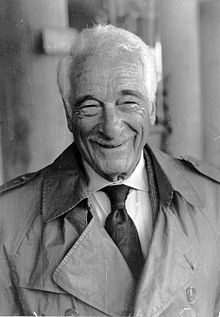
Performer Spotlight: Victor Borge
Today I would like to introduce you to a musician whose performances I have really enjoyed.
Victor Borge was a wonderful comedian and musician. Mr. Borge was born on January 3, 1909 and passed away on December 23, 2000.
He was born in Denmark. His parents were both musicians. His father was a violist and his mother was a pianist. Victor Borge began piano lessons when he was two years old.
During World War II, he had to escape his country and he fled to the United States. When he arrived, he had $20 and he had to pay $3 for customs! He did not know any English, but learned a lot by watching movies. He soon began to perform and he developed his musical jokes.
You can find out more about his life here.
Victor Borge was a very talented pianist. He liked to make a joke where he pretended to get "distracted" while he was playing a long piece. He would suddenly start talking about something silly or else he would play something that reminded him of another song (often a popular song) and he would begin to play that song instead!
Here is a video of Mr. Borge playing with Rowlfe the Dog on the Muppet Show. They are playing the Hungarian Rhapsody Number 2 by Franz Liszt.
Want to hear the real pieces? Click on the links below.
Alice Sara Ott performs Liszt's Hungarian Rhapsody No. 2
Lang Lang performs Tchaikovsky's Piano Concerto No. 1
Victor Borge was a wonderful comedian and musician. Mr. Borge was born on January 3, 1909 and passed away on December 23, 2000.
He was born in Denmark. His parents were both musicians. His father was a violist and his mother was a pianist. Victor Borge began piano lessons when he was two years old.
During World War II, he had to escape his country and he fled to the United States. When he arrived, he had $20 and he had to pay $3 for customs! He did not know any English, but learned a lot by watching movies. He soon began to perform and he developed his musical jokes.
You can find out more about his life here.
Victor Borge was a very talented pianist. He liked to make a joke where he pretended to get "distracted" while he was playing a long piece. He would suddenly start talking about something silly or else he would play something that reminded him of another song (often a popular song) and he would begin to play that song instead!
Here is a video of Mr. Borge playing with Rowlfe the Dog on the Muppet Show. They are playing the Hungarian Rhapsody Number 2 by Franz Liszt.
Here is another video clip in which Victor Borge is playing a duet with another pianist, but he adds other songs (like "Oh My Darlin' Clementine" and "For He's a Jolly Good Fellow") and then starts changing the key so that the other guy can't figure out what notes to play!
Want to hear the real pieces? Click on the links below.
Alice Sara Ott performs Liszt's Hungarian Rhapsody No. 2
Lang Lang performs Tchaikovsky's Piano Concerto No. 1
Friday, March 22, 2013
Practicing: Spot Spotting
Have any of you ever gone deer spotting?
Deer spotters take a bright spotlight with them out into a field at night and try to catch deer in their light. Today we are going Spot Spotting in your music. What does that mean?
Parents, make a list of all the practice spots mentioned in the last lesson, as well as any other tricky spots your child is struggling with.
If your child struggles with putting line 3 of Cuckoo hands together, put that on the list. If they need to practice G arpeggios for Minuet 2, put that on the list. If they keep forgetting the special chord in French Children's song, put that spot on the list. Each spot should be only a few measures long. Do not put an entire song on the list.
Number the items in your list from 1-6. If you still have more items, start the numbers again and continue numbering 1-6 until all the items have a number.
Give your child a die to roll. Declare that Spot Spotting season has begun and have them roll. How many spots are on the die? Practice the items on your list, checking off each one as you complete it.
Looking for other practice games to play? Check out the Pirates Practice and Dino Stomp games at talentpress.net.
This game is based on a game by Paula Bird on her blog Teach Suzuki.
Deer spotters take a bright spotlight with them out into a field at night and try to catch deer in their light. Today we are going Spot Spotting in your music. What does that mean?
Parents, make a list of all the practice spots mentioned in the last lesson, as well as any other tricky spots your child is struggling with.
If your child struggles with putting line 3 of Cuckoo hands together, put that on the list. If they need to practice G arpeggios for Minuet 2, put that on the list. If they keep forgetting the special chord in French Children's song, put that spot on the list. Each spot should be only a few measures long. Do not put an entire song on the list.
Number the items in your list from 1-6. If you still have more items, start the numbers again and continue numbering 1-6 until all the items have a number.
Give your child a die to roll. Declare that Spot Spotting season has begun and have them roll. How many spots are on the die? Practice the items on your list, checking off each one as you complete it.
Looking for other practice games to play? Check out the Pirates Practice and Dino Stomp games at talentpress.net.
This game is based on a game by Paula Bird on her blog Teach Suzuki.
Friday, March 8, 2013
Collective Cadenza: Creative Musicians
The technology we have available to share music today allows us to hear and see more musicians and types of music than ever before. Here are some more creative and knowledgeable musicians who are doing some fun things with music. They are called Collective Cadenza or cdza.
Do you know what a musical cadenza is? A cadenza is an extra, often fancy, part of the piece of music that is sung or played by a soloist or a group of soloists. It is usually not too long. They often have a free feeling, meaning the tempos and rhythms can change from they way they are in the rest of the piece. Sometimes the cadenza is improvised, or made up right then. Sometimes a cadenza is written out by a composer.
You can find cadenzas in classical music concertos, vocal pieces, and jazz music.
If you want a more detailed definition, click here.
Collective Cadenza makes short, creative music videos using ideas from other music. Here is a fun piano piece, featuring 6 guys on one piano! Can you hear where the music changes styles? (Classical...jazz...etc.)
Here they are, taking us on a musical tour of the world in 18 songs, in December of 2012. Click on "show more" under the description for a list of the countries and songs they are playing. (Just above the comments.) How many of these songs do you know?
Do you know what a musical cadenza is? A cadenza is an extra, often fancy, part of the piece of music that is sung or played by a soloist or a group of soloists. It is usually not too long. They often have a free feeling, meaning the tempos and rhythms can change from they way they are in the rest of the piece. Sometimes the cadenza is improvised, or made up right then. Sometimes a cadenza is written out by a composer.
You can find cadenzas in classical music concertos, vocal pieces, and jazz music.
If you want a more detailed definition, click here.
Collective Cadenza makes short, creative music videos using ideas from other music. Here is a fun piano piece, featuring 6 guys on one piano! Can you hear where the music changes styles? (Classical...jazz...etc.)
Friday, March 1, 2013
Suzuki Summer Institutes
Even though it is still cold outside, now is the time to be thinking about Suzuki Summer Institutes.
During the week, students will participate in lessons during a master class, group classes like improvisation, choir, handbells, or Orff instruments, and in daily recitals (either as audience members or performers). Parents accompany their children to most classes, but there is also a daily parent class to talk about Suzuki music study and practice. At the parent class, parents can ask questions and share ideas about working with their children.
The atmosphere is so friendly. Everyone learns a lot, but has fun doing it!
This is also the place where Suzuki teachers get their training. Although I am not planning to attend this year, I have really enjoyed the ones I have attended. There are two that are relatively close to us here in PA. I have attended each one at least once and enjoyed both.
The Greater Washington Suzuki Institute is just outside of D.C. in Anandale, VA. The area is very nice and although you do have to drive to get to the institute location each morning, it is easy to access. Their piano institute is June 24-27. Fees are determined by how old your child is, and whether you take the handbell elective or not. Visit this website for more information: Greater Washington Suzuki Institute or download their brochure here.
The Greater Pittsburgh Suzuki Institute is July 28-August 2. This institute will also include violin, viola, cello, flute and guitar Suzuki students, so you will probably get to hear a variety of instruments at the recitals. Fees are determined by what book your child is in. Visit this website for more information: Greater Pittsburgh Suzuki Institute.
What is a Suzuki institute?
Suzuki institutes are a place where students, parents, and teachers come together for about a week to learn and have fun together. It is how the Suzuki community connects and learns from each other.During the week, students will participate in lessons during a master class, group classes like improvisation, choir, handbells, or Orff instruments, and in daily recitals (either as audience members or performers). Parents accompany their children to most classes, but there is also a daily parent class to talk about Suzuki music study and practice. At the parent class, parents can ask questions and share ideas about working with their children.
The atmosphere is so friendly. Everyone learns a lot, but has fun doing it!
This is also the place where Suzuki teachers get their training. Although I am not planning to attend this year, I have really enjoyed the ones I have attended. There are two that are relatively close to us here in PA. I have attended each one at least once and enjoyed both.
The Greater Washington Suzuki Institute is just outside of D.C. in Anandale, VA. The area is very nice and although you do have to drive to get to the institute location each morning, it is easy to access. Their piano institute is June 24-27. Fees are determined by how old your child is, and whether you take the handbell elective or not. Visit this website for more information: Greater Washington Suzuki Institute or download their brochure here.
The Greater Pittsburgh Suzuki Institute is July 28-August 2. This institute will also include violin, viola, cello, flute and guitar Suzuki students, so you will probably get to hear a variety of instruments at the recitals. Fees are determined by what book your child is in. Visit this website for more information: Greater Pittsburgh Suzuki Institute.
Why attend a Suzuki institute?
Testimonials from parents (and grandparents) of students who attend an institute are that the students grow in their knowledge and ability and that they are reignited with a passion for their instrument. Spending time with a group of students who are also studying their instrument is inspiring and encouraging.
I highly encourage all of you to consider attending an institute either this year or next year. If you have family in another state, check the Suzuki website for institutes in their area. Maybe you could combine a family visit with a Suzuki institute!
Here are two short videos from that last institute I attended (Greater Washington). (Sorry about the quality.) This was the final recital of the week, so it featured groups who had been working on pieces all week, like this handbell choir:
and this piano trio:
Thursday, February 14, 2013
Composing: Sequences
As you are composing your piece, you should consider using a sequence. You can create a musical sequence by repeating a short pattern from the melody using different notes.
The pattern should be repeated at least once or twice, but may be longer.
Here is an example of a sequence. Notice that the rhythm pattern is the same, and also all three measures of the sequence have the same pattern of notes stepping up.
When people listen to music, sequences create interesting patterns that are fun to hear. People like patterns!
The pattern should be repeated at least once or twice, but may be longer.
Here is an example of a sequence. Notice that the rhythm pattern is the same, and also all three measures of the sequence have the same pattern of notes stepping up.
Here is another example of a sequence. In this sequence, the third part of the sequence has the same rhythm pattern, but the note pattern changes a little.
Friday, January 25, 2013
Recycled Orchestra
"The world sends us garbage. We send back music."
-Favio Chavez, Recycled Orchestra director
Imagine if your home was in the city landfill, where all the garbage from everyone else's homes is dumped. In Paraguay, some children and their families do live in landfills. They and their parents work in the landfill, trying to earn money by recycling materials that other people have thrown away. These children do not have the opportunity to take piano or violin lessons because the cost of a violin is worth more than what their house costs.
However, some very smart and caring people have come up with a way for these children to have a chance to play musical instruments. They build instruments out of recycled materials from the landfill!
Watch this video to see how the gift of music has been given to these children. They find joy in the beautiful music they make.
-Favio Chavez, Recycled Orchestra director
Imagine if your home was in the city landfill, where all the garbage from everyone else's homes is dumped. In Paraguay, some children and their families do live in landfills. They and their parents work in the landfill, trying to earn money by recycling materials that other people have thrown away. These children do not have the opportunity to take piano or violin lessons because the cost of a violin is worth more than what their house costs.
However, some very smart and caring people have come up with a way for these children to have a chance to play musical instruments. They build instruments out of recycled materials from the landfill!
Watch this video to see how the gift of music has been given to these children. They find joy in the beautiful music they make.
Friday, January 18, 2013
Composing Vocabulary
This week we began our composing adventure! Here is a review of some of the vocabulary and ideas we talked about in group classes:
Phrase: A musical phrase is like a sentence written with notes.
You can create a complete musical phrase by writing a "question" and an "answer."
In the key of C, I told you to make the question end on G so that it sounds like we need to keep going.
The answer will end on C, which will make it sound like a finished phrase (or sentence).
Word painting: Word painting (sometimes called tone painting) is when you write music that makes a sound to describe what the words are saying.
For example, if the words talk about going up, you can make the notes go up higher on the piano. Or, if the words are about a bouncy ball, you could choose to write some staccato notes to create the sound of the bounces.
ABA form: This is called ternary form. There are three sections to the song and the first and last sections are very similar. The middle section can sound quite different; it contrasts with the A section.
Two examples of Suzuki songs with this form are Chant Arabe in Book 1 and Ecossaise in Book 2.
You can create a simple ABA song in the following way:
Time signature: This sign is placed at the beginning of the song, next to the clefs. It tells us how many beats are in a measure and what note gets 1 beat.
Enjoy creating your own music!
Phrase: A musical phrase is like a sentence written with notes.
You can create a complete musical phrase by writing a "question" and an "answer."
In the key of C, I told you to make the question end on G so that it sounds like we need to keep going.
The answer will end on C, which will make it sound like a finished phrase (or sentence).
Word painting: Word painting (sometimes called tone painting) is when you write music that makes a sound to describe what the words are saying.
For example, if the words talk about going up, you can make the notes go up higher on the piano. Or, if the words are about a bouncy ball, you could choose to write some staccato notes to create the sound of the bounces.
ABA form: This is called ternary form. There are three sections to the song and the first and last sections are very similar. The middle section can sound quite different; it contrasts with the A section.
Two examples of Suzuki songs with this form are Chant Arabe in Book 1 and Ecossaise in Book 2.
You can create a simple ABA song in the following way:
- Write a phrase (question and answer). This is the A section.
- Write a different phrase (different question and answer). This is the B section.
- Repeat the A section.
You can make the song longer by putting more than one phrase in a section.
Time signature: This sign is placed at the beginning of the song, next to the clefs. It tells us how many beats are in a measure and what note gets 1 beat.
Enjoy creating your own music!
Friday, January 4, 2013
Composing Online
You can look in your Suzuki music book for the names of some composers whose songs you know how to play. Look at the right side of the page underneath the title.
What is the name of the composer who wrote the song you are learning right now?
(Sometimes it will say "Folk Song" or "Anonymous". This means we don't know who the composer is.)
People share the music they composed in different ways. One way is to play the song for another person. They can also teach another person how to play their song by showing them how to do it. One of the main ways people share the music they have composed is by writing it down using notes on the staff. That way, anyone who knows how to read music can learn to play their song, even if they never meet the composer!
The link below leads to a fun game to play online that lets you compose a very short song. All you have to do is drag notes onto the staff. When the note turns green, you can let go and it will be written on the staff. Once you fill the measures with notes, you can have the computer play your song.
Compose some music on this game. Pick your favorite song and click "Send to my friend". Send it to me at laura@kautzstudio.com and I will be able to hear your song too!
(If you are in book 2 or 3, be sure to click on the "Advanced" button so that you have more note choices.)
Compose Your Own Music Here at Classics for Kids
Subscribe to:
Comments (Atom)