Showing posts with label listening. Show all posts

Monday, September 15, 2014

Listening: Theme and Variations

There are many forms that composers use to create a musical piece. One form is called "theme and variations". A theme and variations form begins with a melody line that forms the theme of the piece. After the theme is played, the composer creates variations using the notes from the theme and changing the rhythm, key signature, time signature, style, or even the direction of the notes so that it sounds different. Sometimes there are only a few variations, but sometimes a composer will write many variations. Johann Sebastian Bach wrote a piece for the harpsichord, called The Goldberg Variations, that has 30 variations!

A theme could be taken from a folk song or other popular song.
For example, here is Hong Kong Pure Strings performing variations on Happy Birthday.
They chose to create variations that change the style of the song. First, they play it the way we often sing it. Then they choose styles that sound like Spanish style, a waltz, and also mimic famous pieces. For example, there is a variation that sounds a lot like Johannes Brahms' Hungarian Dance No. 5!
Can you find it?   (Click the link above to hear the Brahms piece.)


Many times a composer will use a theme from another composer's famous piece. In the videos below, you can listen to several pieces where the composers did just that.

The following video is a piece by Johannes Brahms. It is Variations on a Theme by Haydn for two pianos. The performers are Anastasia and Liubov Gromoglasova.


The next theme and variations were written by Chopin. He used a theme from the composer Rossini.
In this video, the performers, Richard Shaw and Elizabeth Walker, are performing on instruments from the time that Chopin wrote the music. In fact, the piano is one of Chopin's own pianos!
How do the flute and piano look different than the flute and piano we see today?



Friday, May 23, 2014

Music Genres: Silly "On Hold" song

It has been a busy Spring, and I am afraid my blogging fell behind! Here is something to enjoy during your holiday weekend...when, I hope, you will NOT be "on hold"!


At some time in our lives we will all make a phone call and find ourselves "on hold" until someone can answer our call. Usually there is some kind of tinny music playing while we wait.  What if the music was a whole lot more fun?  What if it went through as many genres or styles of music as possible?

That is exactly what this group of musicians did. They were challenged to make an "on hold" song that used as many genres as possible. Bluegrass, Blues, Dixieland, Rock...they used all these and more.  Watch the bottom right of the screen to see the name of each genre.


Friday, April 11, 2014

Salut Salon - A Unique Quartet

I came across this quartet's video on Facebook this week. These ladies enjoy adding a dramatic flair to their performance by playing their instruments in many different (and difficult!) ways.

This piece is a kind of musical joke. They are creating humorous moments by how they play and what music they choose to play.
  For example, they begin with Vivaldi's "Summer" from The Four Seasons. Usually an entire orchestra plays this piece, but they turned it into a duel between the cello and violin. Then there is a big surprise...the piano joins too! The piano is not normally a part of this piece.

  Part way through, you will hear a little of the James Bond theme song suddenly appear, which is very silly. Soon after that, the piano takes over and suddenly begins to play the first movement of Mozart's Sonata in C Major (K. 545). This is a piece that pretty much every pianist plays at some time if they continue piano lessons. It is quite popular and beautiful, but sometimes pianists get a little bored with it since EVERYONE plays it, so this pianist decides to try different ways to play it. Could you play some of your pieces the way she is playing hers?

  Then she changes the style again and the group finishes with a jazz song called "Mack the Knife".

Enjoy watching and listening!


This second video features a group of young string players who join the quartet for a song.


Wednesday, March 5, 2014

Review Session: Looping with Alex Brubaker

Local musician, Alex Brubaker, was our special guest for group class last week. Here is a recap of the information he gave us about looping for those who missed the class or want to review:

Definitions

  • Sample - A pre-recorded piece of audio. This can be music, spoken word, background noise, or any other sound that can be recorded.
  • Sampling - The playback of pre-recorded audio.
  • Loop - An audio sample that repeats after it has been played through.
  • Looping - The playback of an audio sample that restarts after it is completed (like playing a song on repeat).
  • Live Looping - The recording and playback of a looped audio sample in real-time.
  • Overdub - playing over top of a loop.

Musical Examples

Listen to the following examples of sampling and looping. What do you hear? 
How is looping being used in the pieces?

First, here is part of Alex's live example to us at the group class:


Next he had us listen to three musicians using looping:


(Listen for how she samples a drum beat in this piece.)


Aaron Collier creates a piece using the piano. Can you hear where he makes the sounds in the loop play backward (reversed loop)?


Alex gave us a summary of how to loop and what controls we might use. Here is what he said:


Monday, February 24, 2014

Frozen

It has been a cold and snowy winter. Our favorite musicians have been hard at work. The Piano Guys combined Vivaldi's famous piece "Winter" with the popular song "Let it Go", from the movie  Frozen, to create an exciting new piece of music. Then they filmed the music video in an ice castle!

First, watch famous violinist, Itzhak Perlman, perform "Winter" by Antonio Vivaldi. This is part of a larger piece called The Four Seasons. (Watch at least the first four minutes and you will hear a large part of what The Piano Guys quote in their piece.)


Now watch The Piano Guys!


Friday, November 22, 2013

A Little Night Music: The Music of Crickets

Here is an amazing bit of music I came across on the internet. We all know what crickets sound like, right? They are the soundtrack of our summer evenings. In this recording, someone slowed the cricket sounds down, and discovered that they sound like a choir singing. There are beautiful harmonies, all created by the crickets!

As they explain on the recording, you are hearing two tracks. One track is the crickets at the normal speed we usually hear them. The other track is the same crickets slowed down. 

 https://soundcloud.com/acornavi/robert-wilson-crickets-audio

Friday, November 8, 2013

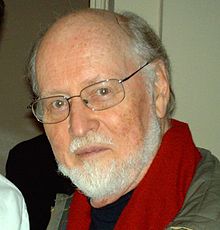
Composer Spotlight: John Williams

These days, the movie industry creates a place for many composers and musicians to create new music that the whole world will hear. This music is used to tell a story, to set the scene, and to bring up emotional feelings like happiness, sadness and danger for the people who are listening and watching.

John Towner Williams, Jr. was born in 1932. He is a very successful film composer. Today he is considered to be one of the best film composers of all time! He has won 5 Academy Awards, but has been nominated 48 times for the award. The only other person to be nominated more times for this award is Walt Disney. He has also won many other awards.

Mr. Williams is a composer, conductor and a pianist. He has been working as a musician in these ways for over 60 years, and is still composing today. 

Here are just a few of the movies he has written music for:
     Jaws
     Indiana Jones 
     Star Wars
     Superman
     E.T., the Extra-Terrestrial
     Schindler's List
     Harry Potter
     The Adventures of Tintin

He also wrote the theme song for some of the Olympic Games.

Writing music for a movie takes a lot of work! The director of the movie meets with the composer to tell them about the movie and to show them the film. Then the composer must create themes for the movie. Mr. Williams composes these themes on the piano first. Later he will score them for an orchestra to play. Once the orchestra learns the music, Mr. Williams conducts the music while watching parts of the movie so that he can make the film and the music go together. He and the director must work to make sure the music and the video do the best possible job of telling the story of the movie.

Below is a video of John Williams talking about working with director Steven Spielburg on the movie E.T., the Extra-Terrestrial. This movie came out in 1982, and today it is considered to be a classic. John Williams won an Academy Award for Best Original Score for this movie. 


Tuesday, September 17, 2013

Composer Spotlight: J.S. Bach

In the next few months, we will be focusing on different composers and their works. 

Johann Sebastian Bach was born in 1685 in the country of Germany. He is part of the Baroque period of music. 

Although the piano as we know it did not exist in that time, there were other keyboard instruments that Bach played on and composed music for. Bach composed many pieces for the organ and the harpsichord. In total, Bach wrote more than a thousand compositions. 

He is considered to be one of the greatest composers of all time, not just because of how many pieces he composed, but because of the musicianship that is required to play the pieces and how much people have enjoyed his music. Imagine if people were still enjoying and playing your music more than 200 years after you wrote it!

In the video below, you can watch organist Hans-Andre Stamm perform one of Bach's most famous pieces of music - the Toccata and Fugue in D minor. 

This is a huge organ, with hundreds of pipes that create high sounds, low sounds, trumpet sounds, reed sounds, and other sounds. The pipes are controlled by levers on the side of the keyboards called stops. The ones that are pulled out further than the others are the ones he is currently using. Look how many more stops there are! 

There are even stops that go with the keys that the feet play. Imagine if you pulled out all the stops...how loud and incredible a sound you would get! This is where the phrase "pull out all the stops" comes from.


The second video is Bach's Prelude and Fugue number 2 from a collection of preludes and fugues called The Well-Tempered Clavier. Anthony Newman is playing it on the harpsichord. You will notice that this instrument also has more than one keyboard. Like the piano, it has strings, but the harpsichord plucks the strings instead of hitting them, which creates a very different sound from the piano. 


Friday, August 16, 2013

Listening: The Wizard of Ahhhs

Here is a fun music video that was created about the movie, The Wizard of Oz. The music is a combination of many of pop songs. The fun part is that the words still help tell the story of the The Wizard of Oz! Do you recognize any of the songs?

The singers in this video are Todrick Hall, who was a finalist in season 9 of American Idol, and the a capella singing group, Pentatonix, who won the third season of The Sing-Off. The word "a capella" means that people are singing without any accompaniment from other instruments. You will hear what sounds like drums and a bass guitar in the music video, but each of those are actually one of the members of the group making those sounds! 

Enjoy your visit to Oz!


Friday, August 2, 2013

Listening: Mr. Rogers Remix

These days, computers allow us to create music out of any kind of sound. You can even change the words someone speaks so that it sounds like a note!

In the video below, you will hear a remix of scenes from Mr. Rogers' Neighborhood. A remix is a song in which the original song or, in this case, spoken words, are changed to create a new song. The pitch of Mr. Rogers' voice has been edited using a computer so that it sounds like notes in the song. 

This could also be an example of sampling. Sampling takes parts, or samples, of a sound recording and reuses it in another song or piece of music.


Definitions of remix and sampling from wikipedia.com.

Friday, July 5, 2013

Listening: The World is Beautiful

Last Friday morning, I went outside to look at the hydrangea bushes which were beginning to bloom. I was fascinated by the sight of some small bees who were flying around and landing on the blossoms. I took some short video clips of them. Inspired by the video and the sounds of the birds in the background, I improvised a piece of music to accompany the beauty I had just experienced. 

  Here is the piece that I composed. I am sorry that I didn't have a way to make it with higher video quality, but I hope you will enjoy listening. The music the birds were making in the background is part of my music. Together, we say, "The World is Beautiful."


Look at the world around you. What do you find that is beautiful? 
Can you create some music that describes what you see or how you feel?

You can record yourself as you improvise (make up things) on the piano. Maybe you hear some sounds around you that can be part of your music as well.  If you hear something you really like, bring it to your next lesson so that I can listen to it too!

Friday, June 21, 2013

Composer Spotlight: Jeff Raught

Today I would like to introduce a fellow musician and composer here in Lancaster, Pennsylvania.
  
Jeff Raught is a funny, creative, talented artist. His main instrument is piano and he plays in a fun and unique style. On his website, Jeff describes the kind of music he plays as "a little jazz, a little laid back, some fun. I don't really know."  
Jeff didn't have much formal training in music, but he loves to improvise. His performances are always fun.

He is also a comedian, so some of his songs are very funny. He performs with Ted Swartz in the group Ted and Company.

For example, here is his song entitled, "Manna". It is based on the story of the Israelites who were travelling in the desert and had run out of food. God fed them with manna every day...for years and years.

Manna


Here is an example of his music for piano from his album In the Midst. I enjoy listening to this album because it makes me feel relaxed and peaceful.

Autumn Daze


You can listen to and download his music for free here.  Check it out!

You can go to a performance by Jeff Raught on July 28 at Hanover Brethren in Christ Church or on August 17 at Laurelville Mennonite Church Center.  See the complete information here.

Friday, May 31, 2013

Listening: Flight of the Bumblebee

"Flight of the Bumblebee" is a very well-known piece of music. It was composed by Nikolai Rimski-Korsakov in 1899-1900. Originally, it was part of an opera called The Tale of Tsar Saltan.  

In the opera, a magic Swan-Bird changes the Tsar's son into an insect so that he can fly away to visit his father (who does not know that he is still alive). This music was used to end the scene. 
(See wikipedia for more information.)

Today, "Flight of the Bumblebee" is played on all kinds of instruments. Professional and amateur performers like to show off their technical ability and speed. Although it looks like they can do it so easily, it sometimes takes them years of slow practice and slowly increasing the speed to be able to play the piece at the speeds they choose.

Here is pianist Yuja Wang playing "Flight of the Bumblebee". Her speed and accuracy are incredible. She not only plays all the notes, she is able to make the melody sound louder than the other notes. This is very difficult.


Click the link below to see a 16 year-old playing on the marimba. The marimba is an instrument that is set up much like piano keys, but you strike it with a mallet.

Flight of the Bumblebee on Marimba

Friday, April 26, 2013

Listening: The Music of the Universe

"The music is all around us; all you have to do is listen."

So says August, in the movie August Rush. He is right. There is music everywhere around us. Even outer space is full of sound waves and radio frequencies. For example, here is what a red giant star sounds like if the light waves are translated into sounds that we can hear.
      Red Giant Concert

Did you know that the Earth is also making sounds? Human ears cannot hear many frequencies of sound, but Earth is emitting radio frequencies all the time. In October of 2012, NASA spacecraft orbiting Earth recorded some of these sounds and brought them up into an octave that we can hear.

A group of dancers used these sounds to inspire a beautiful musical piece. Notice how they introduce in their dance some of the unique features that make planet Earth a place we can live: earth, wind, fire and water.


Are you interested in learning more about the NASA project that is recording these sounds? 
You can watch a video here.

Friday, April 5, 2013

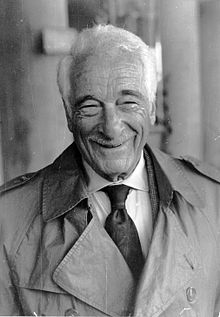
Performer Spotlight: Victor Borge

Today I would like to introduce you to a musician whose performances I have really enjoyed. 

Victor Borge was a wonderful comedian and musician.  Mr. Borge was born on January 3, 1909 and passed away on December 23, 2000.  
   He was born in Denmark. His parents were both musicians. His father was a violist and his mother was a pianist. Victor Borge began piano lessons when he was two years old.

During World War II, he had to escape his country and he fled to the United States.  When he arrived, he had $20 and he had to pay $3 for customs! He did not know any English, but learned a lot by watching movies. He soon began to perform and he developed his musical jokes.
  You can find out more about his life here.

Victor Borge was a very talented pianist. He liked to make a joke where he pretended to get "distracted" while he was playing a long piece. He would suddenly start talking about something silly or else he would play something that reminded him of another song (often a popular song) and he would begin to play that song instead!

Here is a video of Mr. Borge playing with Rowlfe the Dog on the Muppet Show. They are playing the Hungarian Rhapsody Number 2 by Franz Liszt. 


Here is another video clip in which Victor Borge is playing a duet with another pianist, but he adds other songs (like "Oh My Darlin' Clementine" and "For He's a Jolly Good Fellow") and then starts changing the key so that the other guy can't figure out what notes to play!


Want to hear the real pieces? Click on the links below.
Alice Sara Ott performs Liszt's Hungarian Rhapsody No. 2
Lang Lang performs Tchaikovsky's Piano Concerto No. 1

Friday, March 8, 2013

Collective Cadenza: Creative Musicians

 The technology we have available to share music today allows us to hear and see more musicians and types of music than ever before. Here are some more creative and knowledgeable musicians who are doing some fun things with music. They are called Collective Cadenza or cdza. 

   Do you know what a musical cadenza is?   A cadenza is an extra, often fancy, part of the piece of music that is sung or played by a soloist or a group of soloists. It is usually not too long. They often have a free feeling, meaning the tempos and rhythms can change from they way they are in the rest of the piece. Sometimes the cadenza is improvised, or made up right then.  Sometimes a cadenza is written out by a composer.
  You can find cadenzas in classical music concertos, vocal pieces, and jazz music. 
If you want a more detailed definition, click here.

Collective Cadenza makes short, creative music videos using ideas from other music. Here is a fun piano piece, featuring 6 guys on one piano! Can you hear where the music changes styles? (Classical...jazz...etc.)


Here they are, taking us on a musical tour of the world in 18 songs, in December of 2012. Click on "show more" under the description for a list of the countries and songs they are playing. (Just above the comments.) How many of these songs do you know?


Thursday, November 15, 2012

Composer Spotlight: Phillip Keveren

  Today I begin a new series of posts about composers.  I plan to feature a different composer every now and then and provide examples of their music.  

  Today's composer is a contemporary composer who is still actively composing music today.  His name is Phillip Keveren.  

   According to the website phillipkeveren.com, Mr. Keveren composes in many different genres.  A genre  of music is a style or kind of music.

  Mr. Keveren has written piano music for the Hal Leonard Student Piano Library. He also has books of music called The Phillip Keveren Series. Some of you may have played some of his piano music.  
(You can find a list of some of his music here.)
  
  Piano music is not the only kind of music Mr. Keveren writes. He also creates orchestrations or music that is made for an orchestra to play.

In the videos below, you can watch performances of some of Phillip Keveren's piano music. Which pieces do you like the most?  Is there a piece you would like to learn someday?

Quick Spin in a Fast Car


Blue


A Misty Morning

All of these pieces were performed by Dr. Alan Huckleberry for The University of Iowa Piano Pedagogy Video Recording Project. This is a current project and they are adding piano music to it every week with the goal of recording 9,000 piano pieces that students can learn to play.

Friday, October 12, 2012

Performance: For the Fishes!


   Music is a wonderful language that all the people in the world value. There are many kinds of music, and many places to perform music. There are all kinds of ways you can share your music with other people.  

   Here is a video of a cellist sharing the music of Johann Sebastian Bach in the National Aquarium in Baltimore, MD. Maybe some of you have been to this aquarium.  What do you think the fish thought about the music? You can see that people stopped to listen.

   As you watch Alisa Weilerstein play, you will see that she is very expressive with her body as well as with the sound of the music. How does the music make you feel?