Wednesday, November 5, 2014
Play an Instrument: Grow Your Brain
This is an excellent video explaining recent findings by scientists about how playing an instrument uses more of our brain than any other activity or skill. Playing an instrument gives your brain a "full brain workout" and actually increases many abilities!

Monday, October 13, 2014
Theme and Variations: A Little Inspiration
This week group classes are composing variations of Mary Had a Little Lamb.
Ideas for how to change the theme to create new variations include:
Ideas for how to change the theme to create new variations include:
- Add a note (or two or three) in between the melody notes. An easy way to make sure they sound right is to use notes from the chords.
- Change what octave you are playing in on the piano.
- Change to the minor key.
- Put the melody in the left hand and the harmony in the right hand.
- Use a sequence of a few of the melody notes.
What other changes can you think of?
Click on the link below to see many of the ideas I listed above demonstrated by a pianist.
Another Take on Variation
This young man created variations of Mary Had a Little Lamb by using other famous songs and putting the theme of Mary in them. The list of famous songs includes classical and pop favorites like Revolutionary Etude, Phantom of the Opera, Linus and Lucy, and Beethoven's 5th Symphony.
Monday, September 15, 2014
Listening: Theme and Variations
There are many forms that composers use to create a musical piece. One form is called "theme and variations". A theme and variations form begins with a melody line that forms the theme of the piece. After the theme is played, the composer creates variations using the notes from the theme and changing the rhythm, key signature, time signature, style, or even the direction of the notes so that it sounds different. Sometimes there are only a few variations, but sometimes a composer will write many variations. Johann Sebastian Bach wrote a piece for the harpsichord, called The Goldberg Variations, that has 30 variations!
A theme could be taken from a folk song or other popular song.
For example, here is Hong Kong Pure Strings performing variations on Happy Birthday.
They chose to create variations that change the style of the song. First, they play it the way we often sing it. Then they choose styles that sound like Spanish style, a waltz, and also mimic famous pieces. For example, there is a variation that sounds a lot like Johannes Brahms' Hungarian Dance No. 5!
Can you find it? (Click the link above to hear the Brahms piece.)
Many times a composer will use a theme from another composer's famous piece. In the videos below, you can listen to several pieces where the composers did just that.
The following video is a piece by Johannes Brahms. It is Variations on a Theme by Haydn for two pianos. The performers are Anastasia and Liubov Gromoglasova.
A theme could be taken from a folk song or other popular song.
For example, here is Hong Kong Pure Strings performing variations on Happy Birthday.
They chose to create variations that change the style of the song. First, they play it the way we often sing it. Then they choose styles that sound like Spanish style, a waltz, and also mimic famous pieces. For example, there is a variation that sounds a lot like Johannes Brahms' Hungarian Dance No. 5!
Can you find it? (Click the link above to hear the Brahms piece.)
Many times a composer will use a theme from another composer's famous piece. In the videos below, you can listen to several pieces where the composers did just that.
The following video is a piece by Johannes Brahms. It is Variations on a Theme by Haydn for two pianos. The performers are Anastasia and Liubov Gromoglasova.
The next theme and variations were written by Chopin. He used a theme from the composer Rossini.
In this video, the performers, Richard Shaw and Elizabeth Walker, are performing on instruments from the time that Chopin wrote the music. In fact, the piano is one of Chopin's own pianos!
How do the flute and piano look different than the flute and piano we see today?
Tuesday, August 5, 2014
Just for Fun: Farmer Klingenberg
Well, I have been taking a break on blog posts this summer, but I thought this video would be fun to share. A classmate of mine from college and his brother, Derek, are farmers in Kansas. They are also creative musicians and record music (usually parodies of popular songs) on the side.
In this video, Derek calls his heifers from out in the pasture with his trombone! For the past week, they had been feeding the heifers treats when they came, and for fun he had added the sound of his trombone. Now they come running when they hear the sound of his music!
Their parody (a parody means writing new words to a well-known song) of "What Does the Fox Say" was also a big hit. Here is "What Does the Farmer Say?"
In this video, Derek calls his heifers from out in the pasture with his trombone! For the past week, they had been feeding the heifers treats when they came, and for fun he had added the sound of his trombone. Now they come running when they hear the sound of his music!
Their parody (a parody means writing new words to a well-known song) of "What Does the Fox Say" was also a big hit. Here is "What Does the Farmer Say?"
Friday, May 23, 2014
Music Genres: Silly "On Hold" song
It has been a busy Spring, and I am afraid my blogging fell behind! Here is something to enjoy during your holiday weekend...when, I hope, you will NOT be "on hold"!
At some time in our lives we will all make a phone call and find ourselves "on hold" until someone can answer our call. Usually there is some kind of tinny music playing while we wait. What if the music was a whole lot more fun? What if it went through as many genres or styles of music as possible?
That is exactly what this group of musicians did. They were challenged to make an "on hold" song that used as many genres as possible. Bluegrass, Blues, Dixieland, Rock...they used all these and more. Watch the bottom right of the screen to see the name of each genre.
Friday, April 11, 2014
Salut Salon - A Unique Quartet
I came across this quartet's video on Facebook this week. These ladies enjoy adding a dramatic flair to their performance by playing their instruments in many different (and difficult!) ways.
This piece is a kind of musical joke. They are creating humorous moments by how they play and what music they choose to play.
For example, they begin with Vivaldi's "Summer" from The Four Seasons. Usually an entire orchestra plays this piece, but they turned it into a duel between the cello and violin. Then there is a big surprise...the piano joins too! The piano is not normally a part of this piece.
Part way through, you will hear a little of the James Bond theme song suddenly appear, which is very silly. Soon after that, the piano takes over and suddenly begins to play the first movement of Mozart's Sonata in C Major (K. 545). This is a piece that pretty much every pianist plays at some time if they continue piano lessons. It is quite popular and beautiful, but sometimes pianists get a little bored with it since EVERYONE plays it, so this pianist decides to try different ways to play it. Could you play some of your pieces the way she is playing hers?
Then she changes the style again and the group finishes with a jazz song called "Mack the Knife".
Enjoy watching and listening!
This piece is a kind of musical joke. They are creating humorous moments by how they play and what music they choose to play.
For example, they begin with Vivaldi's "Summer" from The Four Seasons. Usually an entire orchestra plays this piece, but they turned it into a duel between the cello and violin. Then there is a big surprise...the piano joins too! The piano is not normally a part of this piece.
Part way through, you will hear a little of the James Bond theme song suddenly appear, which is very silly. Soon after that, the piano takes over and suddenly begins to play the first movement of Mozart's Sonata in C Major (K. 545). This is a piece that pretty much every pianist plays at some time if they continue piano lessons. It is quite popular and beautiful, but sometimes pianists get a little bored with it since EVERYONE plays it, so this pianist decides to try different ways to play it. Could you play some of your pieces the way she is playing hers?
Then she changes the style again and the group finishes with a jazz song called "Mack the Knife".
Enjoy watching and listening!
This second video features a group of young string players who join the quartet for a song.
Friday, March 28, 2014
Practicing: Easter Egg Games
"Children learn to smile from their parents." - Dr. Shinichi Suzuki
I am always on the lookout for creative ways to encourage positive practice that will lead to discipline and endurance, as well as nurture the heart and spirit of a student (and parent!).
 This time of year, you probably have a bunch of these lying around...or you will soon.
Plastic Easter eggs like these can be a fun addition to your practice routine.
Here are several ideas for how you could use plastic eggs to create practice games:
1. For Review: Write the name of each review song on a strip of paper. Put one song name inside each egg. Have your child pick and open one egg, and then play that song. You could go through all the eggs in one practice session, or decide on a number of review eggs to pick each day.
2. Egg Hunt: This is a variation of the review game. Hide the eggs in the room so that your child gets to search for the eggs first. They play each song as soon as they find the egg. (This is great for young kids who want to move around a lot.)

3. Practice Sections: Take a look at your notes from the last lesson. Find the small "practice spots" that need attention. If, for example, you need to repeat a section 5 times, then write that section of 5 slips of paper and put them in 5 eggs. Then add a few more eggs for another practice spot. Mix up the eggs and have your child pick them one at a time. This game should be completed in one practice session. It will help your child learn to stay focused, but also gives them a clear indication of when they will be finished.
4. Rewards: Fill each egg with a small reward (coins, candy, a small toy) and place them in a basket in a visible location. Set a specific goal that will earn an egg. For example, a happy practice session, practicing all the items in your notes, playing all the review songs, completing practice on a hard spot, or staying on the bench for the whole practice session. Make sure the child knows exactly how to earn the egg, and when it will be rewarded to them.
Wednesday, March 5, 2014
Review Session: Looping with Alex Brubaker
Local musician, Alex Brubaker, was our special guest for group class last week. Here is a recap of the information he gave us about looping for those who missed the class or want to review:

Alex gave us a summary of how to loop and what controls we might use. Here is what he said:
Definitions
- Sample - A pre-recorded piece of audio. This can be music, spoken word, background noise, or any other sound that can be recorded.
- Sampling - The playback of pre-recorded audio.
- Loop - An audio sample that repeats after it has been played through.
- Looping - The playback of an audio sample that restarts after it is completed (like playing a song on repeat).
- Live Looping - The recording and playback of a looped audio sample in real-time.
- Overdub - playing over top of a loop.
Musical Examples
Listen to the following examples of sampling and looping. What do you hear?
How is looping being used in the pieces?
First, here is part of Alex's live example to us at the group class:
First, here is part of Alex's live example to us at the group class:
Next he had us listen to three musicians using looping:
(Listen for how she samples a drum beat in this piece.)
Aaron Collier creates a piece using the piano. Can you hear where he makes the sounds in the loop play backward (reversed loop)?
Alex gave us a summary of how to loop and what controls we might use. Here is what he said:
Friday, February 28, 2014
Music Activities: Spring themes

Spring is coming and it is time for some fresh ideas!
Here are some fun ways to reinforce what you are learning in lessons. The links below will lead you to games and worksheets, most with a Spring or Easter theme.
Suggested uses:
- Find a game that will help with a concept for which you could use some practice. For example, matching the piano keys with their letter names, or notes on the staff. Play the game at the end of your practice time as a reward for good practicing.
- You could play the game at a completely different time than your practice time for a short review session.
- Make two copies of a worksheet. Be the teacher for someone else in your family. Can you help them complete the worksheet? Be sure to explain how to figure out the answers!
 |
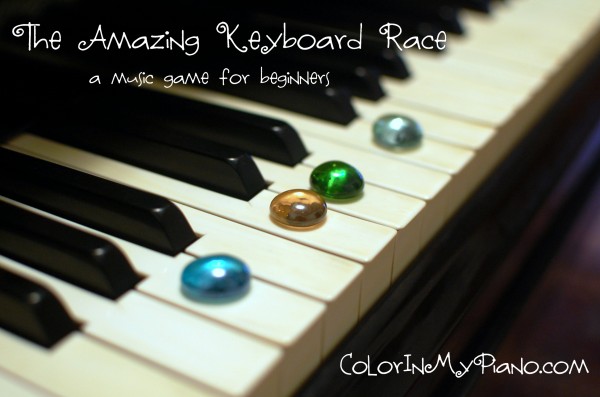 |
Amazing Keyboard Race Game

Color the Egg

Bunny Basics (note story)
Monday, February 24, 2014
Frozen
It has been a cold and snowy winter. Our favorite musicians have been hard at work. The Piano Guys combined Vivaldi's famous piece "Winter" with the popular song "Let it Go", from the movie Frozen, to create an exciting new piece of music. Then they filmed the music video in an ice castle!
First, watch famous violinist, Itzhak Perlman, perform "Winter" by Antonio Vivaldi. This is part of a larger piece called The Four Seasons. (Watch at least the first four minutes and you will hear a large part of what The Piano Guys quote in their piece.)
Now watch The Piano Guys!
First, watch famous violinist, Itzhak Perlman, perform "Winter" by Antonio Vivaldi. This is part of a larger piece called The Four Seasons. (Watch at least the first four minutes and you will hear a large part of what The Piano Guys quote in their piece.)
Now watch The Piano Guys!
Friday, February 14, 2014
How to Succeed
As musical artists, we are always practicing to improve our ability to express ourselves through the music we play. We must improve our technique so that we can play those tricky or fast passages clearly and with ease. We must strengthen our memory of each part of a piece. We study theory and the structure of music to improve our playing and our composing abilities.
We spend hours preparing for, learning and polishing a piece before we share it with other people. The great artists we look up to have spent even MORE hours working on their music.
Yet so often we hear the comment, "She is talented," as if that is the explanation for why she can play so well.
The way to succeed at anything is to repeat what you know how to do over and over again, and also add to your knowledge as you go.
This is the reason that we work on review pieces instead of just "going on" to the next thing. This is the reason we celebrate with book recitals which require us to work on many pieces for more than a year.
Through review and continued study, we reach new levels of ability and expression in a piece. We get a little closer each day to the way we want to sound.
This video, featuring the statements of Ira Glass, a writer, describes this idea about how to close the gap between what we want to be or do, and what we currently can do.
THE GAP by Ira Glass from frohlocke on Vimeo.
We spend hours preparing for, learning and polishing a piece before we share it with other people. The great artists we look up to have spent even MORE hours working on their music.
Yet so often we hear the comment, "She is talented," as if that is the explanation for why she can play so well.
Dr. Suzuki said, "Knowledge is not skill. Knowledge plus 10,000 times is skill."
The way to succeed at anything is to repeat what you know how to do over and over again, and also add to your knowledge as you go.
This is the reason that we work on review pieces instead of just "going on" to the next thing. This is the reason we celebrate with book recitals which require us to work on many pieces for more than a year.
Through review and continued study, we reach new levels of ability and expression in a piece. We get a little closer each day to the way we want to sound.
This video, featuring the statements of Ira Glass, a writer, describes this idea about how to close the gap between what we want to be or do, and what we currently can do.
THE GAP by Ira Glass from frohlocke on Vimeo.
Monday, January 27, 2014
New Website and A Little Music Humor
My new website is live! I will still be adding a few things, but otherwise I am happy with the result. A big thank you goes out to my husband who programmed it all for me!

Here is a little musical humor to bring some fun to your week. Enjoy!

From "Don't shoot the pianist" blog.
Here is a little musical humor to bring some fun to your week. Enjoy!
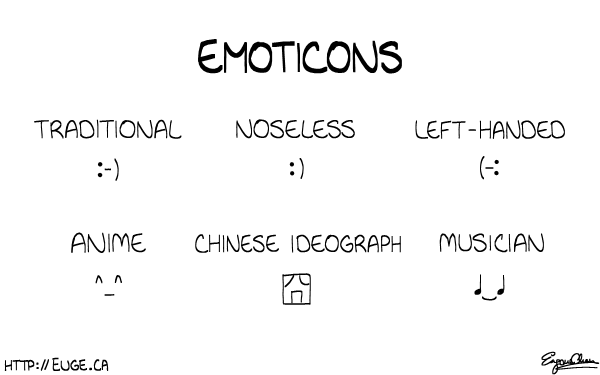
From "Don't shoot the pianist" blog.
Subscribe to:
Comments (Atom)