Here is an amazing bit of music I came across on the internet. We all know what crickets sound like, right? They are the soundtrack of our summer evenings. In this recording, someone slowed the cricket sounds down, and discovered that they sound like a choir singing. There are beautiful harmonies, all created by the crickets! As they explain on the recording, you are hearing two tracks. One track is the crickets at the normal speed we usually hear them. The other track is the same crickets slowed down. https://soundcloud.com/acornavi/robert-wilson-crickets-audio
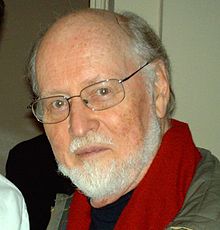
These days, the movie industry creates a place for many composers and musicians to create new music that the whole world will hear. This music is used to tell a story, to set the scene, and to bring up emotional feelings like happiness, sadness and danger for the people who are listening and watching. John Towner Williams, Jr. was born in 1932. He is a very successful film composer. Today he is considered to be one of the best film composers of all time! He has won 5 Academy Awards, but has been nominated 48 times for the award. The only other person to be nominated more times for this award is Walt Disney. He has also won many other awards. Mr. Williams is a composer, conductor and a pianist. He has been working as a musician in these ways for over 60 years, and is still composing today. Here are just a few of the movies he has written music for: Jaws Indiana Jones Star Wars Superman E.T., the Extra-Terrestrial Schindler's List Harry Potter The Adventures of Tintin He also wrote the theme song for some of the Olympic Games. Writing music for a movie takes a lot of work! The director of the movie meets with the composer to tell them about the movie and to show them the film. Then the composer must create themes for the movie. Mr. Williams composes these themes on the piano first. Later he will score them for an orchestra to play. Once the orchestra learns the music, Mr. Williams conducts the music while watching parts of the movie so that he can make the film and the music go together. He and the director must work to make sure the music and the video do the best possible job of telling the story of the movie. Below is a video of John Williams talking about working with director Steven Spielburg on the movie E.T., the Extra-Terrestrial. This movie came out in 1982, and today it is considered to be a classic. John Williams won an Academy Award for Best Original Score for this movie.
There always seems to be a discussion happening about the benefits of music and the arts. Evidence seems to indicate that people who learn a musical instrument hone creative, collaborative, and technical abilities that are useful and desirable in all of life. These benefits are in addition to the most obvious reasons to participate in music or the arts...we enjoy it and find it beautiful! I am providing two links to writers who each contribute some interesting thoughts to the ongoing conversation. In the first, Joanne Lipman writes for the New York Times to address the question of how much music training has contributed to the success of well-known people in our society. Among the qualities Joanne notes these people improved through music training are "collaboration, creativity, discipline and the capacity to reconcile conflicting ideas". Is Music the Key to Success? The second writer is concert pianist Stephen Hough. His blog provides us with an insight into how a professional musician approaches practicing and preparing for a performance. Parents of Suzuki students may find an idea or perhaps just a refreshed perspective about practicing in this blog. The Practice of Practicing
Do you have any thoughts or tips about practicing to share? Please leave a comment below!
Sir W.S. Gilbert and Sir Arthur Sullivan are famous for their comic operas. A comic opera is a drama that is sung and is funny and light-hearted, and usually has a happy ending. It is a type of operetta. Gilbert and Sullivan lived in England. They worked together from 1871-1896 and wrote fourteen comic operas together. Sir Gilbert wrote the words, or libretto, for the operas. Sir Sullivan composed the music. Three of their most famous operas are H.M.S. Pinafore, The Pirates of Penzance and The Mikado. The characters in the comic operas are exaggerated and their actions can be very silly, which is one thing that makes the shows fun to watch. In H.M.S. Pinafore, Gilbert and Sullivan made fun of the English Navy. Here is the song about the captain (who thinks a lot of himself). He sings about how great he is, but the sailors question him on some things, like whether he ever gets seasick.
In The Pirates of Penzance, one character is a "Major-General". A Major-General is supposed to know about the military, but they made this character funny by making him know a lot about many things in general and not the military! In college you can "major" in a subject which you study. The Major-General has "majored" in lots of subjects, but not the one he should know about!
Here is the song "I am the very Model of a Modern Major-General" from The Pirates of Penzance. This song is quite difficult to sing because there are so many words.
In the next few months, we will be focusing on different composers and their works. Johann Sebastian Bach was born in 1685 in the country of Germany. He is part of the Baroque period of music. Although the piano as we know it did not exist in that time, there were other keyboard instruments that Bach played on and composed music for. Bach composed many pieces for the organ and the harpsichord. In total, Bach wrote more than a thousand compositions. He is considered to be one of the greatest composers of all time, not just because of how many pieces he composed, but because of the musicianship that is required to play the pieces and how much people have enjoyed his music. Imagine if people were still enjoying and playing your music more than 200 years after you wrote it!
In the video below, you can watch organist Hans-Andre Stamm perform one of Bach's most famous pieces of music - the Toccata and Fugue in D minor. This is a huge organ, with hundreds of pipes that create high sounds, low sounds, trumpet sounds, reed sounds, and other sounds. The pipes are controlled by levers on the side of the keyboards called stops. The ones that are pulled out further than the others are the ones he is currently using. Look how many more stops there are! There are even stops that go with the keys that the feet play. Imagine if you pulled out all the stops...how loud and incredible a sound you would get! This is where the phrase "pull out all the stops" comes from.
The second video is Bach's Prelude and Fugue number 2 from a collection of preludes and fugues called The Well-Tempered Clavier. Anthony Newman is playing it on the harpsichord. You will notice that this instrument also has more than one keyboard. Like the piano, it has strings, but the harpsichord plucks the strings instead of hitting them, which creates a very different sound from the piano.
 Here is an amazing bit of music I came across on the internet. We all know what crickets sound like, right? They are the soundtrack of our summer evenings. In this recording, someone slowed the cricket sounds down, and discovered that they sound like a choir singing. There are beautiful harmonies, all created by the crickets!
 https://soundcloud.com/acornavi/robert-wilson-crickets-audio