Friday, April 26, 2013

Listening: The Music of the Universe

"The music is all around us; all you have to do is listen."

So says August, in the movie August Rush. He is right. There is music everywhere around us. Even outer space is full of sound waves and radio frequencies. For example, here is what a red giant star sounds like if the light waves are translated into sounds that we can hear.
      Red Giant Concert

Did you know that the Earth is also making sounds? Human ears cannot hear many frequencies of sound, but Earth is emitting radio frequencies all the time. In October of 2012, NASA spacecraft orbiting Earth recorded some of these sounds and brought them up into an octave that we can hear.

A group of dancers used these sounds to inspire a beautiful musical piece. Notice how they introduce in their dance some of the unique features that make planet Earth a place we can live: earth, wind, fire and water.


Are you interested in learning more about the NASA project that is recording these sounds? 
You can watch a video here.

Friday, April 5, 2013

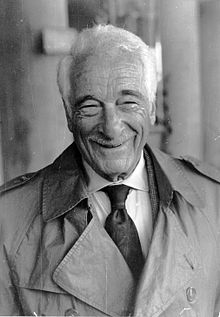
Performer Spotlight: Victor Borge

Today I would like to introduce you to a musician whose performances I have really enjoyed. 

Victor Borge was a wonderful comedian and musician.  Mr. Borge was born on January 3, 1909 and passed away on December 23, 2000.  
   He was born in Denmark. His parents were both musicians. His father was a violist and his mother was a pianist. Victor Borge began piano lessons when he was two years old.

During World War II, he had to escape his country and he fled to the United States.  When he arrived, he had $20 and he had to pay $3 for customs! He did not know any English, but learned a lot by watching movies. He soon began to perform and he developed his musical jokes.
  You can find out more about his life here.

Victor Borge was a very talented pianist. He liked to make a joke where he pretended to get "distracted" while he was playing a long piece. He would suddenly start talking about something silly or else he would play something that reminded him of another song (often a popular song) and he would begin to play that song instead!

Here is a video of Mr. Borge playing with Rowlfe the Dog on the Muppet Show. They are playing the Hungarian Rhapsody Number 2 by Franz Liszt. 


Here is another video clip in which Victor Borge is playing a duet with another pianist, but he adds other songs (like "Oh My Darlin' Clementine" and "For He's a Jolly Good Fellow") and then starts changing the key so that the other guy can't figure out what notes to play!


Want to hear the real pieces? Click on the links below.
Alice Sara Ott performs Liszt's Hungarian Rhapsody No. 2
Lang Lang performs Tchaikovsky's Piano Concerto No. 1

Friday, March 22, 2013

Practicing: Spot Spotting

   Have any of you ever gone deer spotting? 
Deer spotters take a bright spotlight with them out into a field at night and try to catch deer in their light.  Today we are going Spot Spotting in your music. What does that mean? 

Parents, make a list of all the practice spots mentioned in the last lesson, as well as any other tricky spots your child is struggling with.  

If your child struggles with putting line 3 of Cuckoo hands together, put that on the list.  If they need to practice G arpeggios for Minuet 2, put that on the list. If they keep forgetting the special chord in French Children's song, put that spot on the list. Each spot should be only a few measures long.  Do not put an entire song on the list.

Number the items in your list from 1-6.  If you still have more items, start the numbers again and continue numbering 1-6 until all the items have a number.

Give your child a die to roll.  Declare that Spot Spotting season has begun and have them roll.  How many spots are on the die? Practice the items on your list, checking off each one as you complete it.

Looking for other practice games to play? Check out the Pirates Practice and Dino Stomp games at talentpress.net. 

This game is based on a game by Paula Bird on her blog Teach Suzuki.

Friday, March 8, 2013

Collective Cadenza: Creative Musicians

 The technology we have available to share music today allows us to hear and see more musicians and types of music than ever before. Here are some more creative and knowledgeable musicians who are doing some fun things with music. They are called Collective Cadenza or cdza. 

   Do you know what a musical cadenza is?   A cadenza is an extra, often fancy, part of the piece of music that is sung or played by a soloist or a group of soloists. It is usually not too long. They often have a free feeling, meaning the tempos and rhythms can change from they way they are in the rest of the piece. Sometimes the cadenza is improvised, or made up right then.  Sometimes a cadenza is written out by a composer.
  You can find cadenzas in classical music concertos, vocal pieces, and jazz music. 
If you want a more detailed definition, click here.

Collective Cadenza makes short, creative music videos using ideas from other music. Here is a fun piano piece, featuring 6 guys on one piano! Can you hear where the music changes styles? (Classical...jazz...etc.)


Here they are, taking us on a musical tour of the world in 18 songs, in December of 2012. Click on "show more" under the description for a list of the countries and songs they are playing. (Just above the comments.) How many of these songs do you know?


Friday, March 1, 2013

Suzuki Summer Institutes

Even though it is still cold outside, now is the time to be thinking about Suzuki Summer Institutes.  


What is a Suzuki institute?  

Suzuki institutes are a place where students, parents, and teachers come together for about a week to learn and have fun together. It is how the Suzuki community connects and learns from each other.

During the week, students will participate in lessons during a master class, group classes like improvisation, choir, handbells, or Orff instruments, and in daily recitals (either as audience members or performers). Parents accompany their children to most classes, but there is also a daily parent class to talk about Suzuki music study and practice. At the parent class, parents can ask questions and share ideas about working with their children.

The atmosphere is so friendly. Everyone learns a lot, but has fun doing it!

This is also the place where Suzuki teachers get their training. Although I am not planning to attend this year, I have really enjoyed the ones I have attended.  There are two that are relatively close to us here in PA.  I have attended each one at least once and enjoyed both.

The Greater Washington Suzuki Institute is just outside of D.C. in Anandale, VA. The area is very nice and although you do have to drive to get to the institute location each morning, it is easy to access. Their piano institute is June 24-27.  Fees are determined by how old your child is, and whether you take the handbell elective or not. Visit this website for more information: Greater Washington Suzuki Institute or download their brochure here.

The Greater Pittsburgh Suzuki Institute is July 28-August 2. This institute will also include violin, viola, cello, flute and guitar Suzuki students, so you will probably get to hear a variety of instruments at the recitals. Fees are determined by what book your child is in. Visit this website for more information: Greater Pittsburgh Suzuki Institute.


Why attend a Suzuki institute?

Testimonials from parents (and grandparents) of students who attend an institute are that the students grow in their knowledge and ability and that they are reignited with a passion for their instrument. Spending time with a group of students who are also studying their instrument is inspiring and encouraging. 

I highly encourage all of you to consider attending an institute either this year or next year. If you have family in another state, check the Suzuki website for institutes in their area.  Maybe you could combine a family visit with a Suzuki institute!

Here are two short videos from that last institute I attended (Greater Washington). (Sorry about the quality.) This was the final recital of the week, so it featured groups who had been working on pieces all week, like this handbell choir:
and this piano trio: